
Custom Cellar Doors & Egress Systems | Window Wells | Steelway Cellar Doors
Custom Cellar Doors & Egress Systems | Window Wells | Steelway Cellar Doors
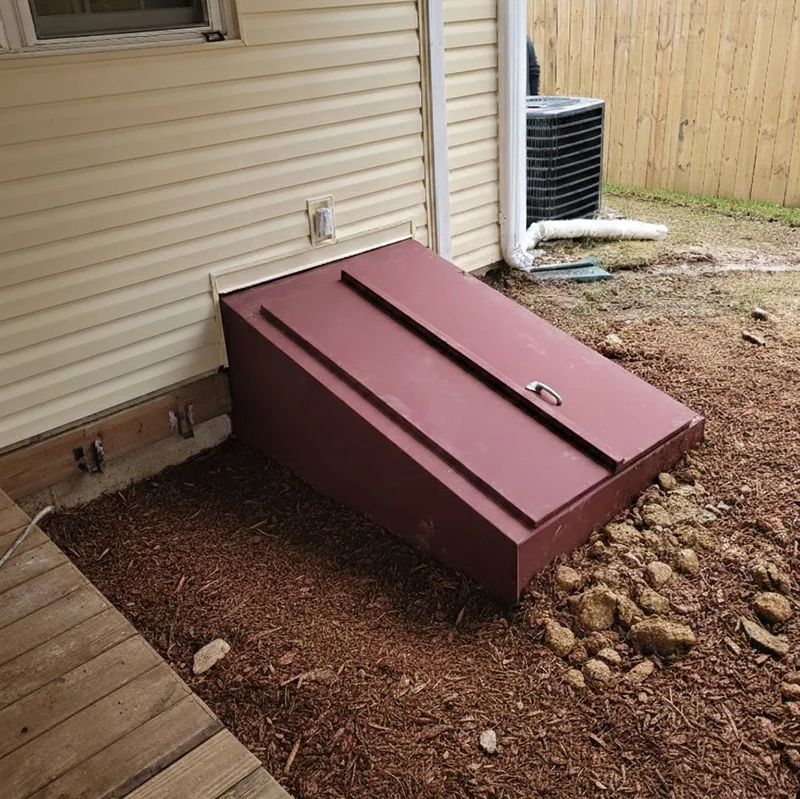
That makes sense. For decades, Bilco has been one of the most recognized names in basement entry doors. Many people use the word “Bilco” the same way they use a brand name to describe an entire product category. They may not know the exact type of cellar door they need, but they know they need something like the basement doors they have seen on other homes.
The problem is that not every basement entry is a standard door size.
That is exactly why Steelway’s custom cellar doors exist.
A standard cellar door can be a great solution when your opening matches one of the available sizes. But if your basement entry is too long, too narrow, too wide, too steep, too flat, set into a corner, built alongside the foundation, or shaped in a way that does not match a standard door, forcing a pre-sized product into that opening can create more problems than it solves.
When a standard door does not match the opening, homeowners should not have to force their home to fit the product. The better approach is a door built specifically for the space.
A custom cellar door is a basement entry door built to the exact measurements and conditions of the job site. Instead of choosing from a limited number of stock sizes, the door is manufactured around the space you actually have.
That matters because basement entries are not all built the same way. Many were constructed decades ago, while others have shifted, settled, or been modified by previous owners over time. In some cases, the existing door was patched together after an older one failed. In others, the opening includes unusual foundation walls, low-lying grade, angled walls, or a stairwell that runs alongside the house.
A custom cellar door is not just a “special order” for someone who wants something different. In many cases, it is the correct solution for a non-standard basement entry.
Steelway’s custom cellar doors are custom-built with no stock sizes, 100% steel construction, fully welded joints with no bolts, multi-coat iron oxide primer, and a weather-tight design. Because each door is made to the exact measurements of the job site, homeowners and contractors can avoid costly extensions, awkward add-ons, and quick fixes that do not last.
Standard cellar doors became popular for a reason. They gave homeowners and contractors a straightforward way to cover common basement entries with a durable steel door. Brands like Bilco helped make the exterior basement door a familiar part of home improvement, especially for homes with traditional angled cellar entrances.
Today, many homeowners still start their search with standard doors because that is what they know. They assume if they need a cellar door, they need a standard Bilco-style replacement.
And sometimes, they are right.
Steelway offers standard cellar doors for common basement entry sizes, including industry-standard angled cellar doors made of heavy 12-gauge steel, no leak points, top-of-the-line gas shocks, and a professional red oxide primer. These standard doors are a strong solution when the opening matches the available dimensions.
But standard doors are only the right answer when the opening is standard.
That is where homeowners often get stuck.
They may start by measuring the existing door, comparing it to standard sizes, calling a contractor, and looking through the most familiar brand-name options. At first, it seems like there should be a simple replacement available. But then the problem becomes clear: nothing fits correctly.
Maybe the opening is a little too long. Maybe the foundation walls are not quite square, the slope is different, or the basement entry runs alongside the house. In other cases, the previous door was homemade, or the space requires a shape that simply is not available in a standard product.
This is the moment where many homeowners assume they have only two choices: alter the space or accept a patched-together fix.
Steelway gives them a better option.
Steelway has been making custom steel cellar doors and prefabricated steel cellar entrances since 1963. That experience matters because custom cellar doors are not an afterthought. They are one of the main reasons Steelway exists.
The purpose of a custom door is simple: to fit the basement entry properly without forcing the homeowner to reshape, rebuild, or compromise the opening.
That is the key difference.
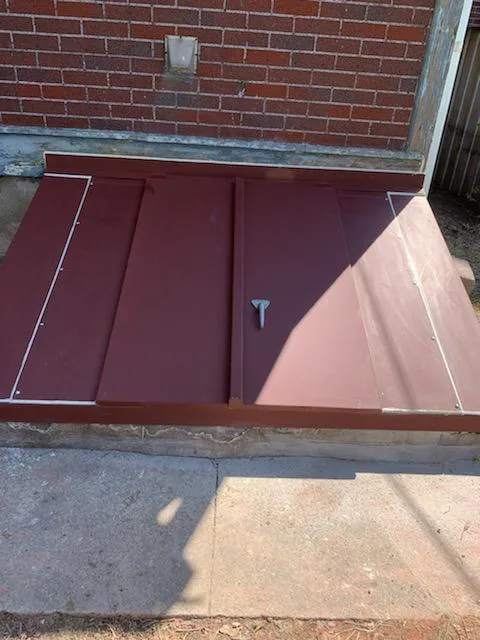
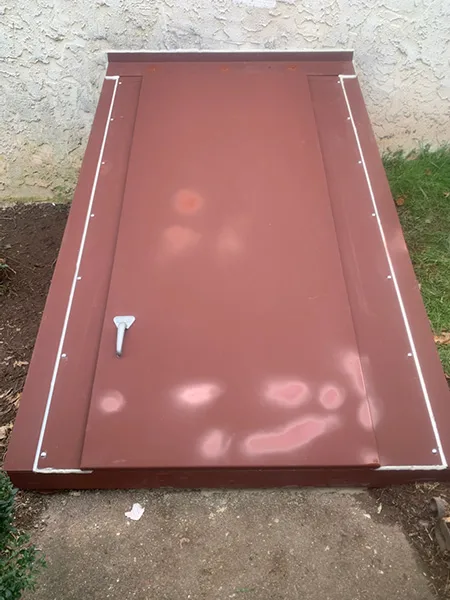
A standard door limits the homeowner to the sizes already available. A custom door starts with the exact measurements of the opening, creating a solution built for the space instead of making the space fit the product.
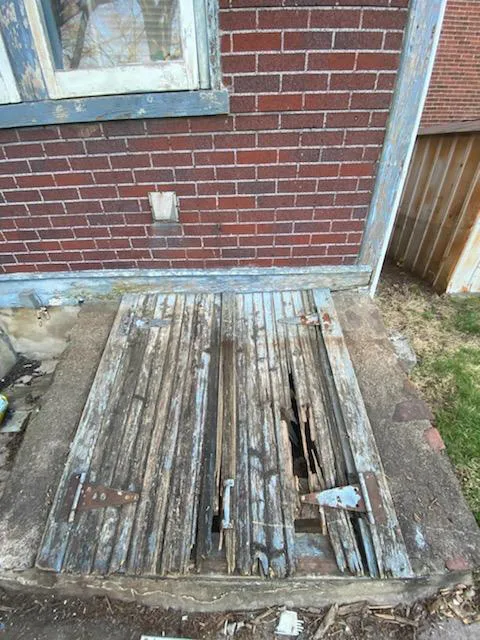
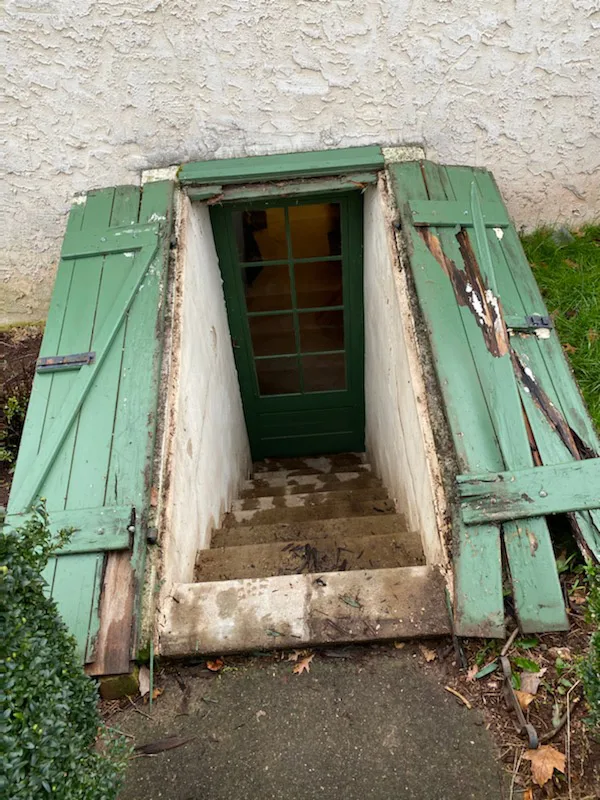
That difference can save homeowners from years of frustration. When a standard door does not fit, it is common to see people try to make up the difference with extensions, wood framing, plywood, roofing materials, metal patches, or foundation modifications. Those fixes may seem less expensive at first, but they often become more expensive over time.
A poor fit can lead to water issues, rust, rot, gaps, difficult operation, and repeated repairs. If the surrounding foundation or masonry is modified incorrectly, the homeowner may also create a bigger construction problem than the door replacement itself.
That is why “close enough” is not good enough.
A cellar door sits outside in the weather while protecting one of the most vulnerable openings into the home. The right door needs to shed water, operate safely, seal properly, and hold up season after season. When it is not a perfect fit for the space, the entire system doesn’t work the way it should.
Before
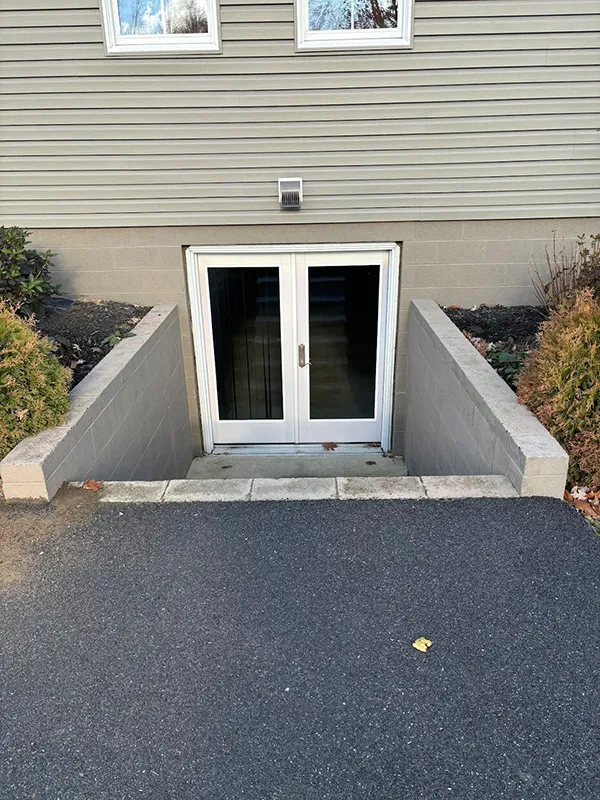
After
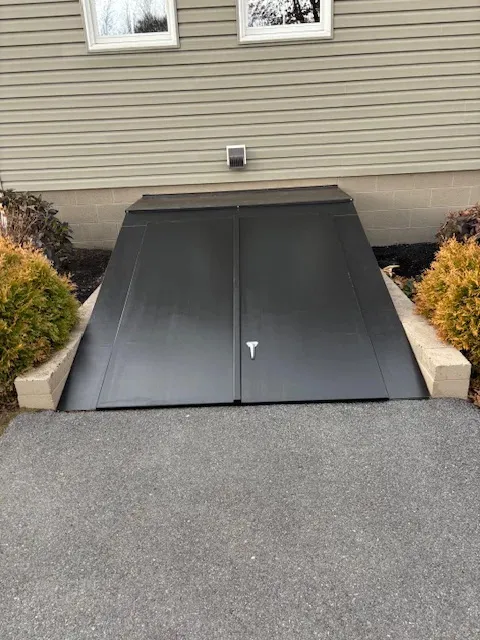
Before
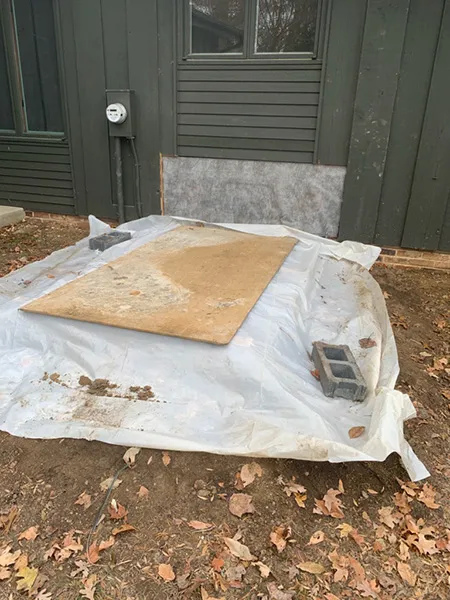
After
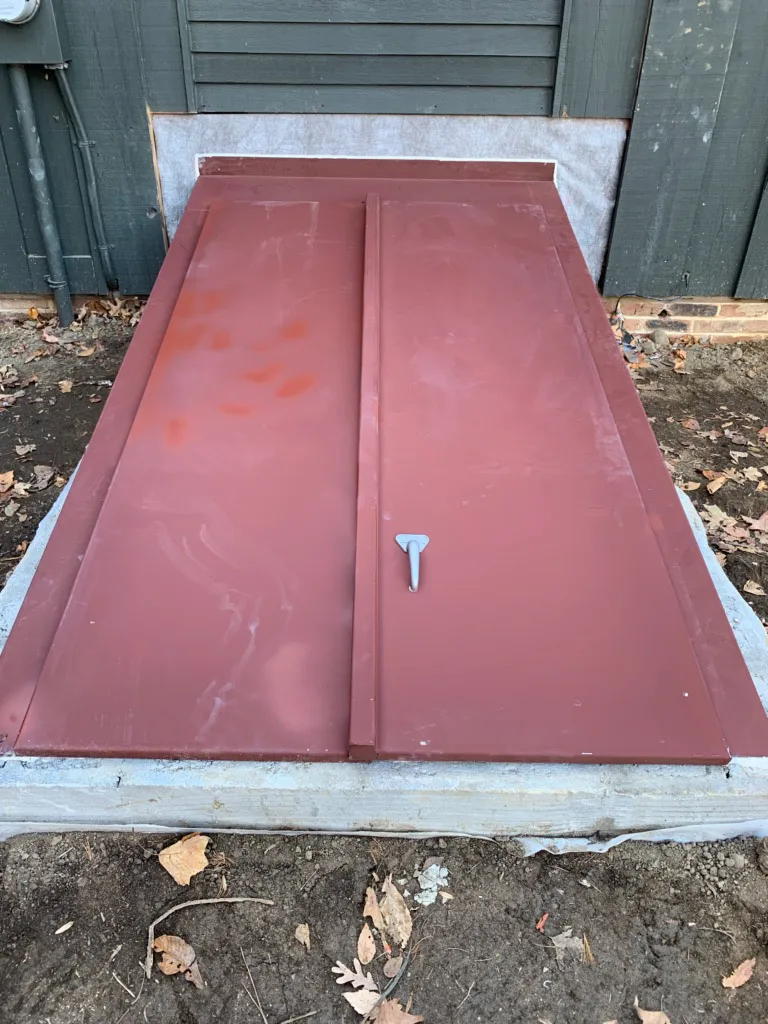
Before

After
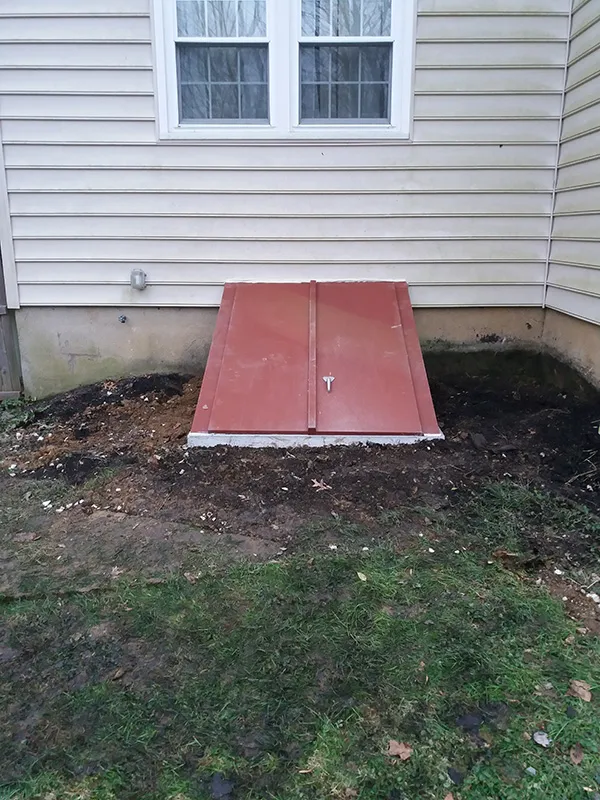
Before
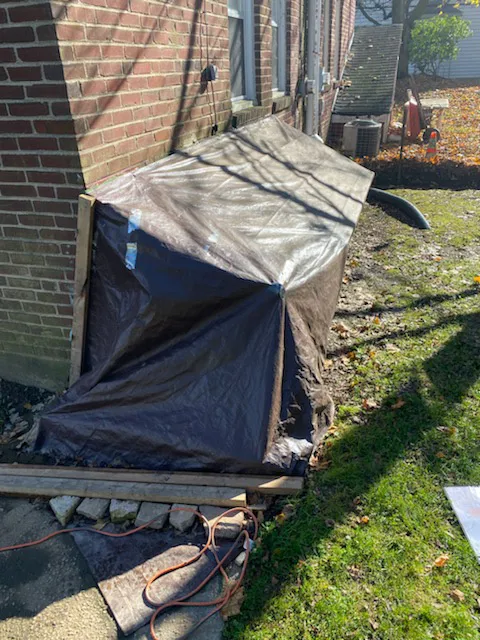
After
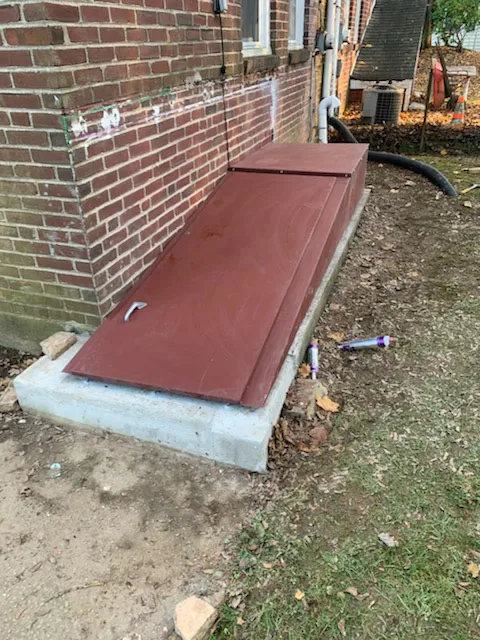
Before
After
Before
After
When a standard door does not fit, homeowners and contractors usually try one of a few workarounds.
Extension pieces may be added to make the door longer. Part of the entry may be built up, cut back, or altered to accommodate the closest available size. In other cases, the difference is framed in with wood, or a homemade cellar door is built out of plywood, shingles, or other materials. Extra seams, gaps, and add-ons often become part of the solution simply because no better option seems available.
The issue is not always poor workmanship. In many cases, the contractor or homeowner simply does not know that a custom cellar door is available.
But those workarounds have consequences.
More pieces usually mean more seams, which lead to more potential leak points. Wood and plywood can rot, warp, absorb moisture, and break down. Roofing materials may cover the opening temporarily, but they are not the same as a properly manufactured steel cellar door. Foundation modifications can add unnecessary labor and cost. And in the case where the repair fails, the homeowner is right back where they started.
What starts as a quick fix can turn into a repeat expense, with one patch leading to another repair, and eventually, the cost of correcting the original fit problem is higher than a custom solution would be.
That is why a properly built custom steel cellar door is often the smarter long-term investment.
You may need a custom cellar door for your basement entry if a standard cellar door size is not a perfect fit.
That can happen more often than homeowners expect. Older homes, additions, non-standard foundations, sloped openings, narrow stairwells, low-lying grade, angled walls, and previous repairs can all create a situation where a stock door is not the right fit.
You should consider a custom cellar door if your existing door is homemade, heavily patched, or built from wood. You should also consider custom if a contractor has told you they cannot find a door that fits, if the replacement would require several extensions, or if the only option presented involves altering the foundation to fit the door.
You may also need a custom solution if your cellar entrance falls into a specific layout type, such as angled, flat, corner, B-style, along-side, or angle-on-angle.
Steelway manufactures custom cellar door styles to solve each specific entry condition.
Not all custom cellar doors solve the same problem. The right door depends on how the basement entry is built, where it sits in relation to the house, and what kind of foundation or grade conditions surround it.
Here are several common custom cellar door types.
Angled cellar doors are designed for angled openings leading to a basement or cellar. This is one of the most familiar cellar door styles, but not every angled entry matches a standard size. A custom angled door can provide a better fit when the opening is longer, wider, narrower, or shaped differently than expected.
Flat cellar doors are typically used when the foundation is already sloped. Instead of a traditional raised-angled frame, the door is custom-made to work with the existing slope of the foundation. This can be a better option for certain older homes or unique masonry conditions.
Corner cellar doors are used when one side of the cellar stairwell is also the side of the house, leaving no foundation on one side to mount a traditional frame. These are sometimes called “one-legged” doors. A standard door will not solve this layout properly because the structure itself is different.
B-style cellar doors include an extended front apron that provides extra protection in low-lying areas. This can be useful when the grade around the entrance creates added water exposure or when the doorway needs additional protection at the front.
Along-side cellar doors are typically installed parallel to the basement or cellar wall. These often enclose an existing entrance that runs alongside the foundation, which is not the same as a traditional front-facing angled entry.
Angle-on-angle cellar doors are used when the cellar entrance and the foundation create an angled condition together. In these situations, the door needs to account for multiple angles rather than just sitting on a straightforward opening.
Each of these styles exists because real homes do not always follow standard dimensions. The goal is not to make every homeowner choose custom. The goal is to provide the right product for the actual opening.
A custom fit is only part of the equation. The way the door is built matters just as much.
Steelway custom cellar doors are made with 100% steel construction, heavy-gauge hot rolled steel, fully welded joints, and multiple coats of iron oxide primer. That combination is designed for long-lasting durability when properly maintained.
Fully welded joints are especially important because they help create a stronger, cleaner assembly. Instead of relying on bolts and unnecessary connection points, the door is built as a solid custom unit. That matters when the door is exposed to weather, movement, weight, and years of everyday use.
Steelway doors are also designed with weather protection and security in mind. The weather-tight design helps protect the basement entrance from rain, snow, debris, and pests. The fully welded design and lock systems are built to help prevent unwanted access to the home or business.
Operation matters too. A cellar door should not feel like a burden to open. Steelway doors can include spring assist when the weight or size of the door would interfere with easy use. Because every custom door is different, the operation needs to be considered as part of the design.
That is the advantage of working with a company that understands cellar doors. A custom door is not just about size. It is about fit, function, security, weather protection, and long-term performance.
It is understandable for homeowners to focus on the upfront cost of a cellar door. But the cheapest option on day one is not always the least expensive option over time.
If a standard door does not fit, the homeowner may pay for extensions, extra labor, patching, masonry changes, wood framing, or custom field fabrication. If that solution leaks or fails, they may pay again for repairs. If water gets into the basement, the cost can grow even more.
There is also the cost of frustration. A cellar door that is hard to open, looks patched together, leaks during storms, or needs constant maintenance becomes a recurring problem.
Investing in a custom cellar door from the start can help avoid those repeat costs. Instead of spending money trying to make the wrong door work, you can put that budget toward a door built for the space.
Steelway has spent more than 60 years focused on cellar doors. That experience allows the team to assess any opening and understand the exact product that will solve the problem.
The point of this article is not that standard doors are bad. Standard cellar doors are useful, practical, and effective when they fit the opening correctly.
The point is that standard doors are not the only option.
If your opening matches a standard size, a standard Steelway cellar door may be the right solution. If your opening does not match a standard size, you should not have to alter your foundation, accept a poor fit, or build a temporary wood cover just because that is the only option you have been shown.
That is the reason Steelway custom cellar doors exist.
They give homeowners and contractors a better answer when the standard answer does not fit.
A custom cellar door is a basement entry door built to the exact measurements of the job site. It is used when a standard cellar door size does not properly fit the opening.
You may need a custom cellar door if your basement entry is unusually long, narrow, wide, flat, angled, low-lying, built into a corner, or located alongside the foundation. You may also need custom if your current door is homemade, patched, leaking, or does not match standard sizes.
If a Bilco door or other standard cellar door does not fit, a custom cellar door may be the better solution. Instead of changing the opening to fit the door, Steelway can manufacture a door to fit the opening.
A properly manufactured custom steel cellar door is typically a stronger and longer-lasting solution than a homemade wood, plywood, or patched door. Steelway custom doors are made with 100% steel construction, fully welded joints, and weather-tight design features.
Yes. Steelway makes both standard and custom cellar doors. If a standard size fits your opening, that may be the right option. If it does not, a custom door can be built for your specific basement entry.